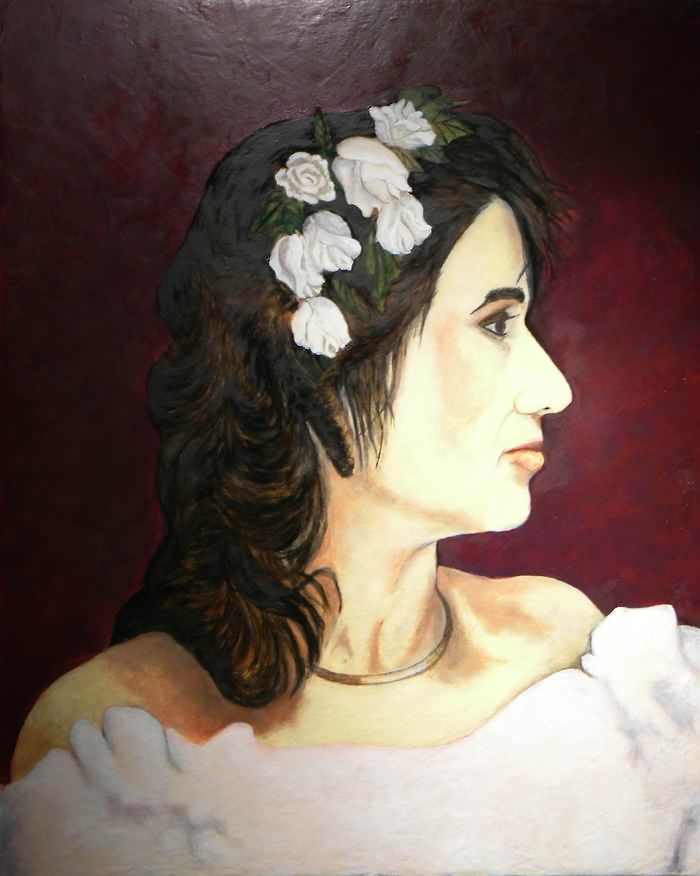
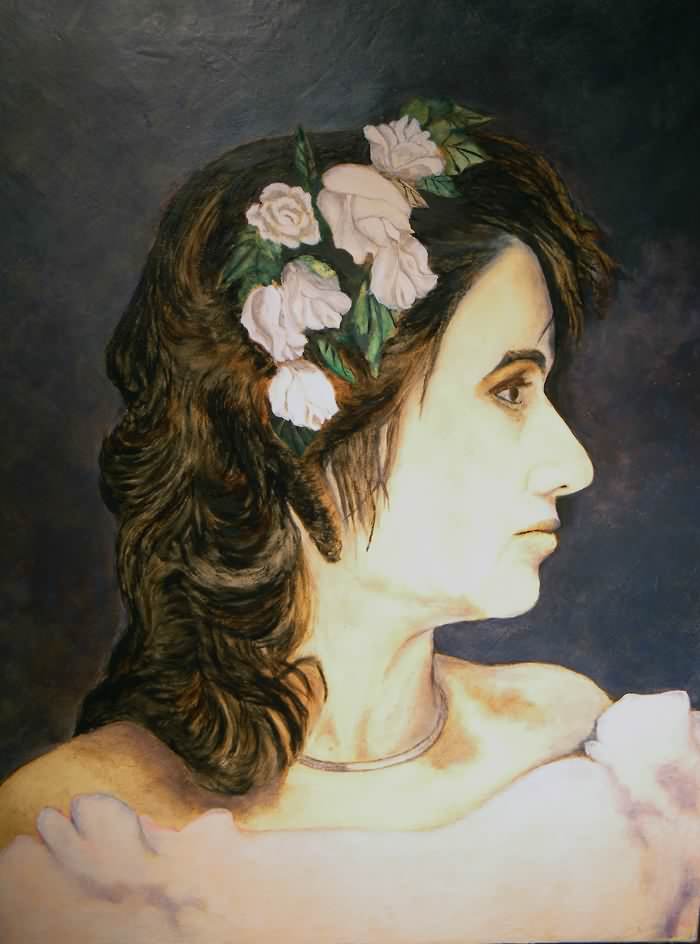
Still another technique that has proven very affective with this medium that I can share with you today. As previous mentioned about the use of dry pastels in the preliminary sketch/brown layer, if you develop the practice of loading your brush in minute quantities with this highly viscous medium it can be used in the same way as the method discussed on 06/09/09 just as with dry pastels. It rubs into the oil out emulsion and can be moved around or removed with the same amount of ease.
| Click image for larger view | At this point in the painting it is at a phase where I and most artists would stand back and take a break to come back after a few days or weeks for analysis of fine details. Shadowing was added with a touch of Indigo in the background. More white has been used to highlight the gown. Detail has been added to the leaves in her hair as well as the necklace.
|
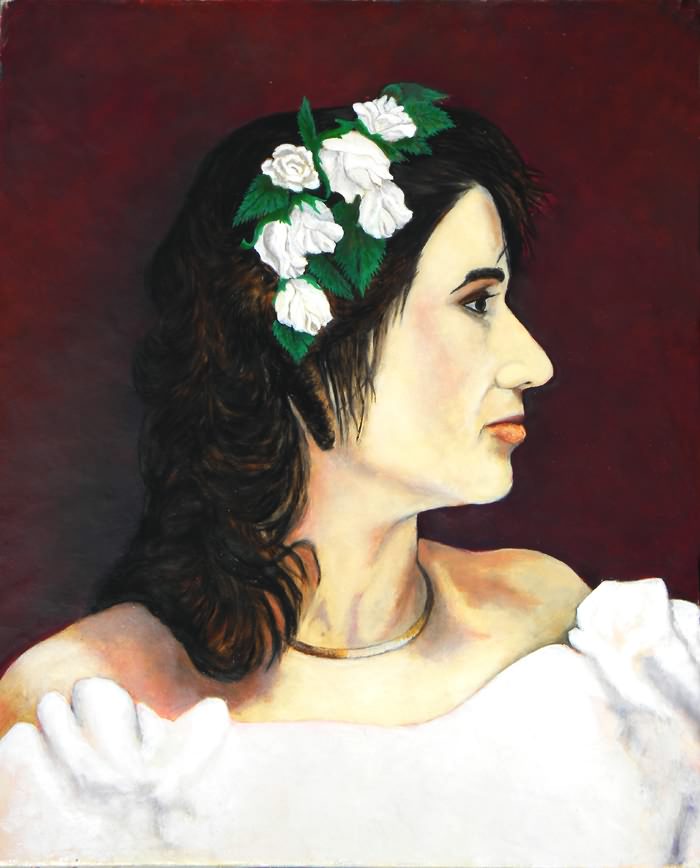
For use with traditional methods of painting, I have found this to be a pleasant experience given the flexibility to use this medium effectively as any on the the market. As you progress through the your painting you will notice inconsistencies in the luster. This is not an issue since, a final clear coat (not a finish) can be applied once you are certain the painting is dry as described in Louis' book.
There are many areas that I have observed needing a little of this or that but I always prefer to take the patient approach towards the final painting details rather than go back and repaint later. I will have to move on to completing the restoration of the frame I have chosen during this drying period. At that time finishing touch ups will be made and I will post the completed project on this post.
Finally, a US canvas company that recognizes the
value of priming the canvas AFTER it's stretched.